
A guy with a keyboard and Internet access. What could go wrong?
Have you found yourself thinking, “I need to read a nice ode to public libraries”? Well, you’re in luck. Orlean (staff writer at the New Yorker for a number of years) had vowed to herself that she was done writing books. As she puts it, writing a book on any given topic is like a “slow motion wrestling match.” Here she spends a good part of a decade wrestling and exploring the circumstances around a fire that consumed much of the Downtown branch of the Los Angeles Public Library in April, 1986.
Was it arson? Maybe. Did the authorities catch the guilty party? Maybe. Did justice prevail and an innocent man was set free? Maybe. You decide. It’s like a choose-your-own-adventure tale!
What is known about the LAPL fire is that it was, and still is, the worst library fire in American history. 400,000 books burned, another 700,000 were damaged by smoke and/or water. Devastating.
Threaded through the story of the LAPL fire, a specific event at a particular time and place, Orlean pulls together the various threads of library history, library philosophy, the public library’s rather unique place in American culture and incorporates a fair bit of library humor to stitch together the story of an institution that is simultaneously fragile and extremely resilient.
Even if I weren’t a public librarian, I would still give this five stars. It’s Orlean’s best work to date. You can find a copy at your local public library: http://www.worldcat.org/oclc/1085572852
I’m not at all sure if any of the following will have any impact one way or another, but it seems that giving money to local campaigns and candidates that I support just isn’t getting the results I would like to see. As humans are wont to do when facing a problem, I have devised a plan of action.
I’ll be printing up a batch of door hangers and I’ll spend an hour or so each week between now and November affixing them to my neighbors’ doors. On Sundays I might also focus on the windshields of cars in church parking lots with slightly amended wording that would appeal more to the righteous crowd.
If folks want to have their own version of this printed up, feel free to copy/paste and put in your own name and location. I’d be happy to be the courier once I get the initial template set up and the printing figured out. According to my reading of the Public Disclosure Commission (https://www.pdc.wa.gov/learn/publications/political-advertising-guide), such an effort doesn’t require any personal information disclosure as long as I don’t spend more than $100 dollars on the effort.
So. Here we go. Here’s the text of of the piece:
Hi, neighbor!
My name is Mark. I live on Madison Street on the Lower South Hill and I love my neighborhood. I also love Spokane. As you are probably aware, we have an election coming up this November.
Here are three races that are of particular importance to me:
The mayoral race. Candidate Nadine Woodward has proposed banning the homeless from using the Spokane Public Library. This idea would not only be illegal and highly impractical to implement, it’s just flat-out uncompassionate. She also went on record to say we don’t need more shelter space for the homeless. Hmm. Reality would seem to indicate otherwise. Spokane needs a practical and compassionate person in the Mayor’s office so I’m voting for Ben Stuckart. Please join me.
City Council president race. Candidate Cindy Wendle has no political or public policy experience and yet she wants to lead the legislative arm of our city government. Her campaign web page lists being a UW Husky fan growing up in Pullman and driving a Chevrolet as a member of the Wendle Ford family as two of her major diplomatic accomplishments… hmm. Right. Conversely, Breean Beggs has a long history of working to improve Spokane through thoughtful leadership, action and legislation. Join me in voting for Breean Beggs.
School board race. A comparison of candidate Katy Treloar’s platform with Nikki Lockwood’s shows that Treloar is short on the specifics of what exactly she would be advocating for in our schools. Lockwood’s stances on special education, racial equity, discipline reform, and safety show a well thought out approach and level of transparency and accountability that Treloar is lacking. Join me in voting for Nikki Lockwood.
Not registered to vote yet? It’s an easy process. Just go to https://olvr.votewa.gov/and get signed up. October 28th is the deadline to register.
This piece of paper is paid for with my own dang money. Not a PAC, not a lobbying firm, not a union, not an industry association, just a neighbor who wants Spokane (and the people in it) to thrive.
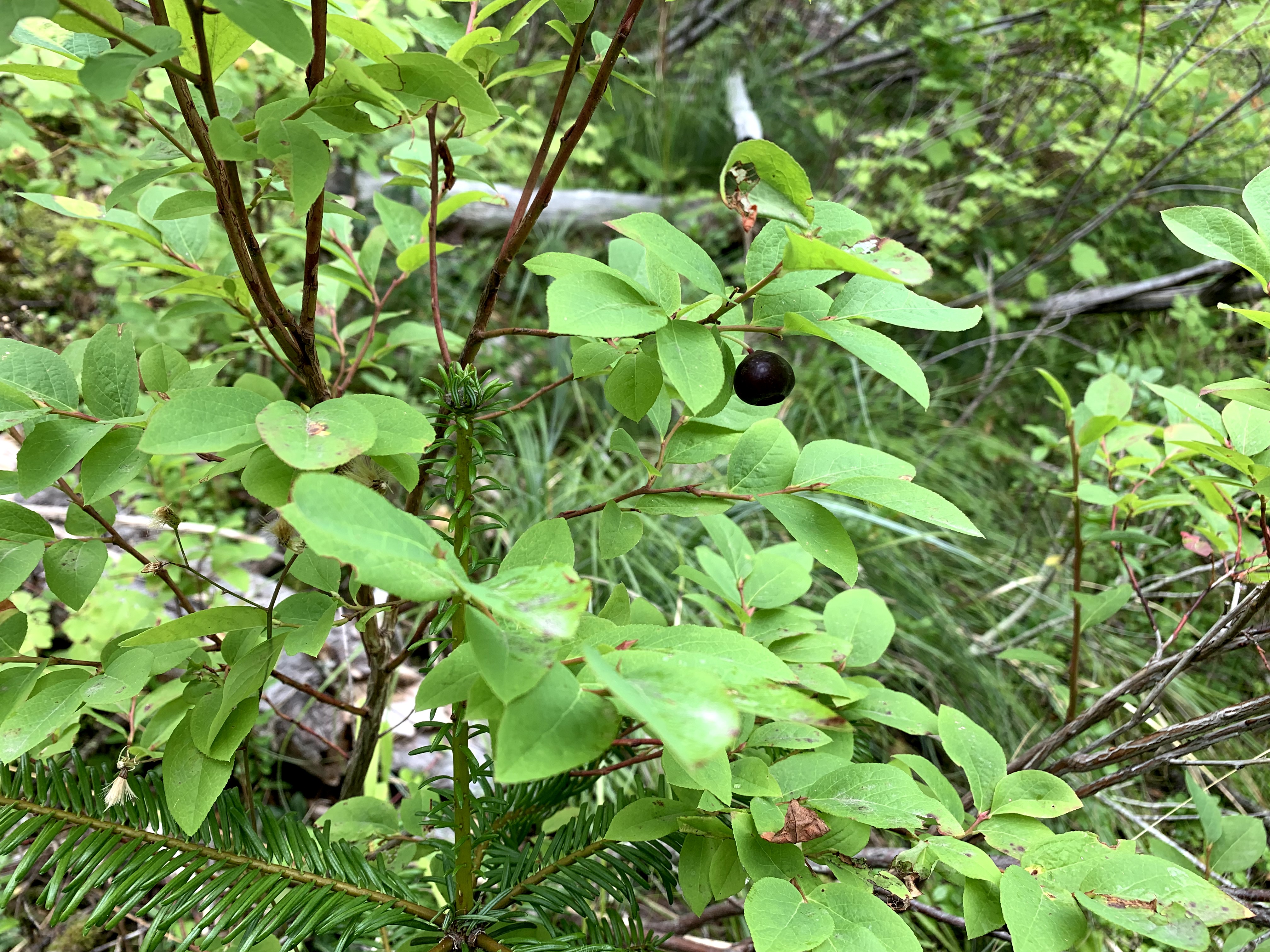
It’s hard to see the scale, but that’s roughly a dime-sized berry. Muy yum. On a hillside somewhere in northern Idaho.
I’ve been sitting out on my front porch this morning, drinking my coffee, doing some reading and watching the world spin around.
Twice in the past 45 minutes, two different drivers have stopped their vehicles at the intersection outside my house to check their phones. I applaud the fact that they are focusing on one thing at a time, but here’s the deal: pick a better place to stop.
Both drivers chose to stop in the lane of traffic, right at an uncontrolled intersection. This causes oncoming/cross traffic to question their intentions. Are they going to go? Do they know how to navigate an uncontrolled intersection? Are they going to turn? Confusion and frustration pretty quickly become the two dominant emotions.
Moral of the story: be picky about where you choose to stop. It matters to other people.
Today is my Dad’s 82nd birthday. Happy birthday, Dad!
I called him up, wished him a happy birthday and we spent 16 minutes and 49 seconds talking about the rainstorm we had in Spokane yesterday. 1 inch of rain in less than 20 minutes.
We talked about how it reminded me of being in an earthquake in Seattle in 2001. 15 seconds of excitement and wonder, followed by 15 seconds of awe, followed by 15 seconds of wishing for nothing other than to have the shaking stop. The timeline yesterday was a little more drawn out but it followed the same pattern: childish glee at the amount of water falling from the sky, followed by amazement at how quickly the street in front of my house turned into a sizable creek, followed by the fervent desire for the rain to stop before someone got killed.
We talked about how the rain reminded me of a couple rainstorms I witnessed when I lived in Florida. Not just sheets of rain moving across the lawn, not just blankets, but duvets stuffed with down comforters of rain. Thick. More water in the air than air.
Here’s what we didn’t talk about: how Florida rain is an unusual thing for Spokane. How a warming atmosphere holds more water vapor than a cooler atmosphere. How flooding will be a more common thing going into the future. How we humans need to curb our emissions, drastically so. Now.
My Dad is 82.
As a parent, that’s primarily what you do in the early years. You’re a caregiver. You feed, bathe, clothe, transport to medical appointments, etc. Every basic caregiving task falls to you. That’s your life.
But then, at certain point, kids generally start doing most of those things on their own. So I had to get a new job.
Rather than a caregiver, I find myself being the giver of cares.
I know an adorable young man. I have great hope for his future. And yet, his most consistent contribution to any conversation these days flows in the vein of “I don’t care.” It turns out that this line has many synonyms: Cool (said in a completely flat, even tone). Mhmm (again, no vocal inflection). That’s so great. So on and so forth.
So it’s now my job to pass along to him those things that are worth caring about. And yes, kiddo, you are right. There are things that aren’t worth caring about. Many of them. But teaching how to filter out the things that are worth caring about and giving them the attention they deserve, that’s the parenting task for today. And it makes caregiving look super easy.
Well, damn. Within a blink of the eye (on the geologic time scale) of me quitting Facebook because of my issue with the company’s seeming inability to treat its users fairly, this comes out: https://www.nytimes.com/2019/01/10/opinion/delete-facebook.html
In short, the author argues that Facebook users shouldn’t be faced with quitting or not quitting the platform based solely on privacy or ethical reasons. Rather, it is a case of whether lawmakers will step up and exercise their regulatory powers or not. By making the decision to quit Facebook rather than lean on my elected representatives to do their job, well… hmmm. That’s a good point. But for me, it comes down to who my elected representatives are. While I trust Senators Murray and Cantwell to land on the right side of the decision, Cathy McMorris Rodgers, my House representative and the closest connection to me and my life, well, she is a complete loser on this (and most other) regulatory issues. So… yes, the current Facebook issue could be and should be dealt with at a regulatory level. But so should climate change.
Until such a glorious day arrives, I just have to do what I can do at the individual level and carry on. And it seems, unless I’m mistaken here, that that glorious day might arrive sooner if the companies I’m railing against have less clout and less money to peddle their influence. That’s where individual action comes in.
It’s true. The human brain is awesome at doing a lot of things. It also tends to fail (sometimes spectacularly) in some predictable ways. Read on.
Well, it finally happened. I was clinging to the edge of the Facebook cliff, looking for every reason to hang on. I really did enjoy using the platform. I liked staying in loose contact with a whole host of people that I don’t see on my day-to-day ramblings around town. Whose kids are graduating from high school, who is traveling to Italy, who is getting engaged? Those sorts of things.
But the Facebook B.S. just kept rolling and I finally had to pull the plug. Beyond the shenanigans of Facebook’s C-suite of decision makers, here’s the thing that bothered me the most about Facebook: it forced me to communicate in the same way to my co-workers as I would to my Mom as I would to my kids’ friends as I would to my college roommates. That’s silly. And unnatural. Each of those populations needs and deserves its own dialect and tone. Will this site solve that problem? Probably not, but at least I can deal with those issues and not have to worry about how complicit I am in Facebook’s latest round of moral shortcomings. I don’t like to worry and there are enough things in this world to worry about that are outside my control that it strikes me as somewhat reasonable to scratch one — just one! — thing off my list of things to worry about.
 ReMarkable